It was late October 2018, right around 2:30 AM. I was driving a winding, isolated stretch of Route 119 through the mountains of eastern Kentucky, heading back from a grueling double shift. The fog had rolled in thick off the ridges. You know that heavy, blinding Appalachian soupy fog that forces you to crawl at twenty miles an hour. Exhausted and white-knuckled, I pulled into a small, concrete scenic rest stop cut directly into the side of a sheer rock cliff.
It was a primitive setup: just a small brick restroom structure, a couple of concrete picnic tables, and a drop-off that looked out into a black, foggy abyss. I was the only car there.
I left the engine idling and walked into the restroom to splash cold water on my face. The fluorescent light overhead was buzzing violently, flickering with an eerie, rhythmic hum. When I walked back out to the lot, the fog had grown so dense I could barely see the red glow of my own taillights.
Then, the mountain went totally silent. The steady drip of condensation from the trees stopped. The hum of my car engine suddenly felt distant, muffled, as if the air itself had turned to lead.
I hurried to the driver’s side door, but before I could grab the handle, two figures stepped out from the dense treeline just past the concrete picnic tables.
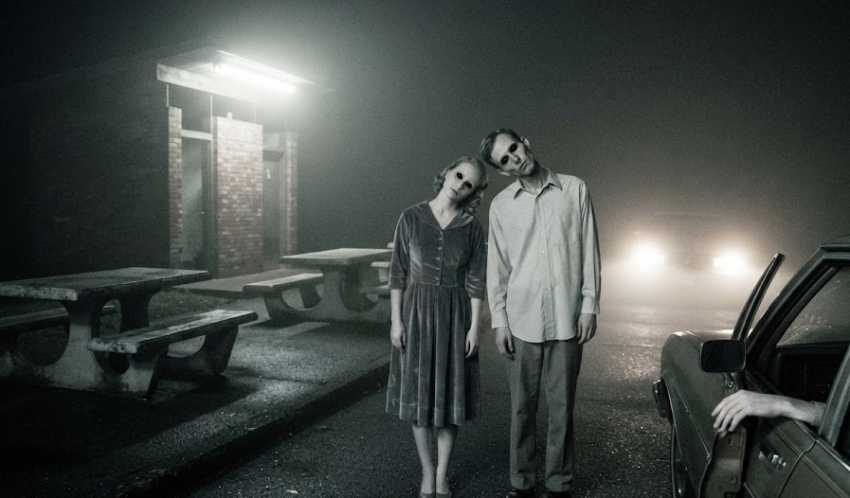
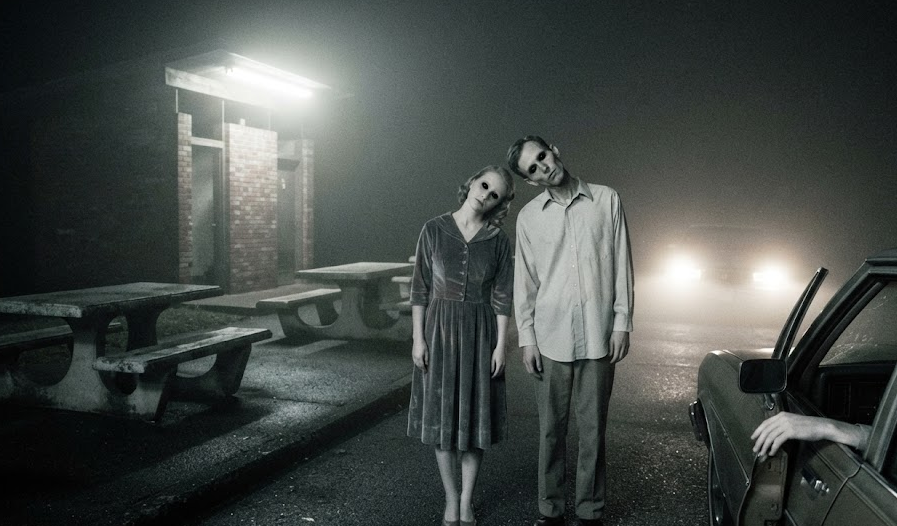
They were a boy and a girl, maybe nine or ten years old. In the hazy glow of my headlights, their clothes looked completely wrong for an autumn night in the mountains. They wore matching, old-fashioned Sunday school lookin outfits—a faded velvet dress on the girl, a stiff, oversized button-down shirt on the boy. The clothes were pristine, completely dry despite the heavy fog, but they looked like they had been pulled straight out of a 1950s photograph.
They didn’t walk; they moved with a strange, hitching syncopation, their limbs stiff as if they were settling into bodies that didn’t quite fit them.
I froze, my hand hovering over the door handle. “Hey, kids,” I called out, my voice cracking in the damp air. “Are you lost? Where are your parents?”
They stopped exactly at the edge of the asphalt, just five feet away. When they tilted their heads up, the breath caught in my throat. Their skin was the color of milk, but it was their eyes that made my stomach drop into a cold vacuum. There was no white, no color, no pupils. Just two solid, glossy orbs of absolute midnight that seemed to absorb the light from my headlamps rather than reflect it.
“Our parents are down in the hollow,” the boy said. His voice didn’t sound like it came from a child’s throat. It was perfectly flat, and seemed to echo inside my own ears. “The truck broke down. We cannot walk anymore.”
“Please,” the girl chimed in, her voice striking the exact same pitch and tone as the boy’s. “Unlock the door. You have to drive us down into the town. We are so very cold.”
A wave of intense, nausea hit me so hard I staggered back against my car. Every survival instinct honed by a lifetime in these ridges told me that whatever was standing in front of me was not human. It was an apex predator wearing a child’s skin.
“I… I can’t do that,” I stammered, pulling open my door and scrambling into the driver’s seat.
Before I could slam the door shut, the boy moved with terrifying, unnatural speed, placing a single, pale hand on the edge of the car door. His fingers were stiff, and his skin looked entirely bloodless.
“You must invite us in,” the boy droned, his black pits of eyes widening slightly. “It is the rule.”
“Let us in,” the girl repeated. She began to step closer, her movements no longer human, but a fluid, predatory glide. “Open the door. Let us in.”
I grabbed the interior handle and pulled with everything I had. To my horror, the door didn’t budge. The boy’s grip on the metal frame felt like a vice grip, his expression entirely blank, completely devoid of any physical exertion.
Desperate, I threw the car into reverse and slammed my foot onto the gas pedal. The tires screeched, spitting gravel against the rock face. The sudden, violent jerk of the vehicle finally broke the boy’s grip. The door slammed shut and the automatic locks engaged with a heavy, reassuring click.
As I spun the steering wheel to swing the car around toward the highway exit, my high beams swept across the rest stop.
The two children were standing perfectly still by the concrete tables. But they weren’t looking at the car anymore. Their heads were tilted completely sideways, resting nearly flat against their own shoulders at a broken, impossible angle, their pitch-black eyes locked onto mine through the windshield.
I hit the main road and didn’t look at the rear view mirror once until I crossed the state line. I still avoid that stretch of 119 after dark; some things in those mountains are just waiting for the right person to say yes.