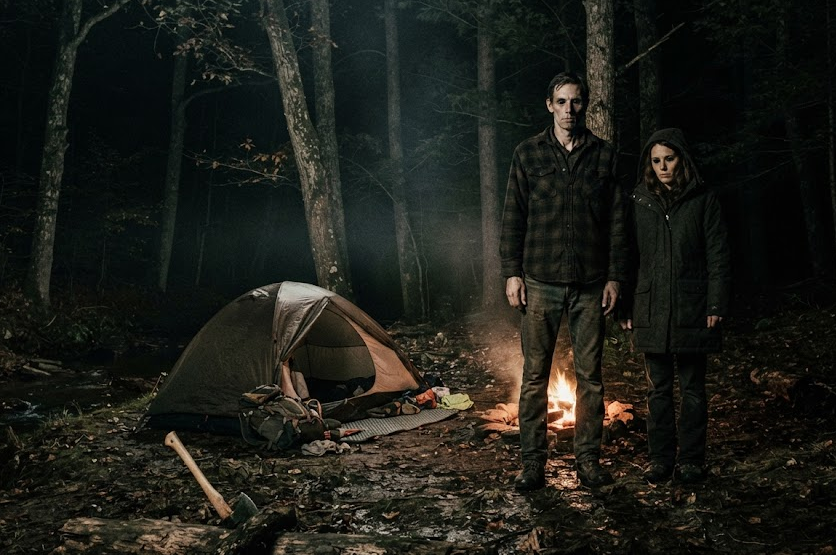
The breakup had been messy, the kind that leaves your chest feeling like a hollowed-out tree trunk. By late October, I couldn’t stand the sight of my apartment anymore, so I packed my multi-day rig, drove out to a remote access point of the Appalachian Trail in southwestern Virginia, and started hiking. I didn’t want to see anyone, so by dusk, I pushed nearly a mile off the main trail, cutting down an old, overgrown logging trace into a deep, nameless ravine.
I pitched my tent near a small, trickling creek. The air was biting, smelling of damp oak leaves and decaying moss. As darkness fell, the mountains became a wall of absolute black. I built a small fire, watching the orange sparks drift up into the canopy, trying to drown out the loop of arguments and regrets playing in my head. For the first time in weeks, I felt a heavy, numb sense of peace.
Then, around midnight, the woods went completely silent.
If you’ve spent any time in the backcountry, you know the woods are rarely truly quiet. There’s always the rustle of birds or squirrels in the leaves, the distant hoot of an owl, or the wind brushing the ridge lines. But this was a sudden, suffocating vacuum. The creek seemed to muffle into a dull hiss. The fire stopped popping.
A heavy, physical dread settled over the camp, the kind that makes the hair on the back of your neck stand straight up. Then suddenly…
Crunch.
A single twig snapped across the creek, just beyond the dim perimeter of my fire’s light.
“Who’s out there?” I called out, my voice sounding incredibly small in the dead air. I reached into my pack and grabbed my bear spray, my knuckles turning white.
From the shadows of a massive, ancient tree, two figures stepped into the low amber glow of the fire.
They were both children, a boy who looked about eleven and a younger girl, maybe eight. They wore matching, denim overalls over plain with white shirts. But there was no mud on their cuffs, no burs stuck to their clothes, and they weren’t carrying packs, flashlights, or water. Out here, a mile off-trail in the fall backcountry, could be death sentence.
But it was their movement that made my stomach turn. They walked with a bizarre, rhythmic stiffness, like marionettes being handled by someone who didn’t understand how human joints worked.
“Hey! Are you guys okay? Where are your parents?” I asked, taking a step back toward my tent.
They stopped at the very edge of the creek bank, barely four feet away. When they lifted their faces, the breath caught in my throat. Their skin had the translucent, waxy quality of a corpse. But their eyes… there was no white. No iris. Just two gaping, glossy pits of absolute obsidian that seemed to absorb the firelight, reflecting nothing.
“We are lost,” the boy said. His voice didn’t match his body. It was a flat, deep, expressionless drone that felt like it was vibrating directly inside my skull. “We went for a walk and the light went away.”
“We are so very cold,” the girl added. Her voice hit the exact same monotone cadence, completely devoid of childhood innocence. “Your tent is warm. Let us inside your tent.”
A wave of intense, primal panic hit me. My vision tunneled. Every instinct I had screamed that these weren’t children. They were like something ancient and predatory, using a human shape like bait.
“I… I can’t do that,” I stammered, raising the bear spray. “I have emergency blankets. I can toss them to you, but you can’t come over here.”
The moment I refused, the children’s faces tightened. Their expressions didn’t change to anger; they just became utterly devoid of the human mask they were trying to wear.
“The blankets will not work,” the boy droned, taking a stiff step across the shallow creek. The water didn’t even seem to splash around his boots. “You must invite us to the fire. You must let us into the tent. It is the rule.”
“Let us in,” the girl chanted, stepping into the water beside him. “WE ARE SO COLD.“
On the word cold, their voices dropped into a guttural, multi-layered roar that echoed off the ravine walls. The remaining coals of my campfire instantly turned gray and died, plunging the camp into total, pitch-black darkness.
Terrified, I didn’t think—I just reacted. I dove backward into my tent, zipped the fly shut, and locked myself inside the nylon walls, pressing my back against the center pole.
Outside, the silence returned, heavier than before. Then came the scratching.
It wasn’t a wild animal tearing at the fabric. It was a slow, methodical, rhythmic dragging of fingernails against the thin nylon of my tent. Skritch. Skritch. Skritch.
“Open the flap,” the boy’s voice whispered from just inches away, right through the fabric by my head. “We know you are alone. We know you are broken. Let us in to keep you company.”
I buried my face in my knees, covering my ears, sobbing silently in the dark. I prayed, I screamed, I held the canister of bear spray like a lifeline. The rhythmic scratching and the flat, droning demands lasted for what felt like centuries, circling the perimeter of my tiny tent over and over again.
I must have passed out from sheer terror. When my eyes snapped open, the pale gray light of dawn was filtering through the rainfly. The suffocating weight in the air was gone. The creek was babbling normally again.
I cautiously unzipped the tent and stepped outside. The campfire was nothing but cold ash. But there, in the soft mud right at the entrance of my tent, were two sets of footprints. They didn’t arrive from the creek, and they didn’t leave toward the woods. They just stood right at my doorway, perfectly still, before vanishing into thin air.
I packed my gear in less than five minutes and ran the entire seven miles back to my car. I went into those woods to find solitude, but I learned the hard way that when you’re completely empty inside, things in the mountains will notice and they will try to fill the void.