I work as a detention officer in a small-town jail tucked away in North Carolina. If you’ve ever spent time in a correctional facility after the sun goes down, you know the atmosphere shifts. The air gets heavy, and the silence isn’t really silent—it’s filled with the hum of the building and the weight of everything that’s happened within those walls. Recently, I’ve had three experiences that have forced me to reconsider what might be lingering in those halls when the inmates are asleep and the lights are low.
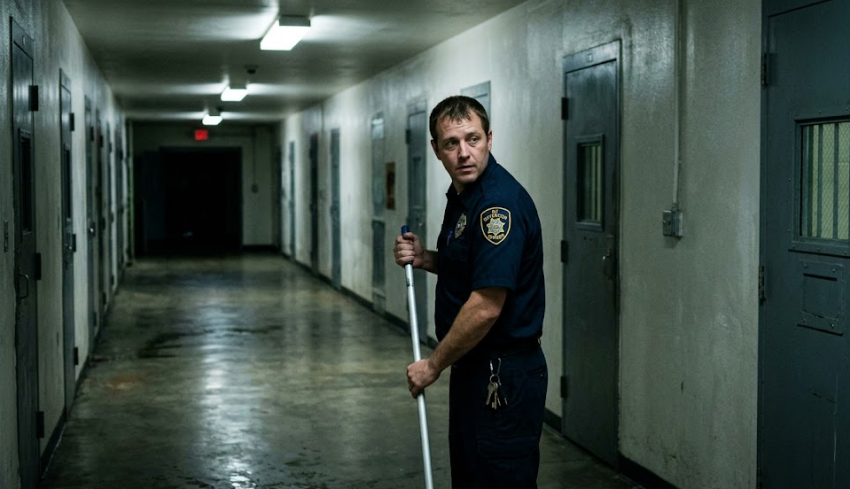
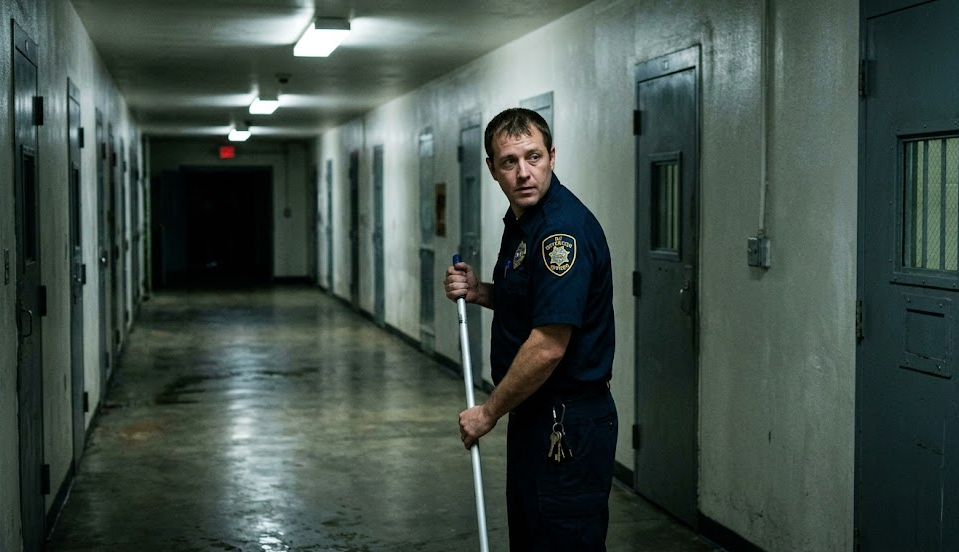
The first incident happened around 11:00 PM. I was mopping a long, isolated hallway, a stretch of about 250 feet that’s essentially a narrow concrete tunnel. When you’re alone in a space like that, the sound of the mop hitting the floor becomes a rhythmic, lonely drone, so I started whistling to pass the time. I was whistling pretty loudly, just a mindless tune echoing off the concrete. Then, I heard it. Clear as a bell, someone whistled the exact same tone and melody right back at me. It wasn’t an echo; it was a response. My first thought was that a coworker was playing a prank, but as the whistling continued for a full 15 seconds, reality set in. In a hallway that long and open, it’s impossible for someone to sneak up on you without being seen. I finally stopped and spun around, expecting a familiar face, but there was nothing but empty, flickering fluorescent light. I even went back and scrubbed the security footage later, desperate to see a person there, but the cameras showed me standing completely alone in a silent hall.
A few weeks later, I was doing my 3:00 AM rounds. At that hour, we keep most of the lights off, and you learn to navigate by the “footprint” of the facility—knowing exactly how many paces it takes to get from one cell block to the next in the dark. As I moved through the shadows, I saw something that didn’t belong to the darkness. It was a figure, a shadow blacker than the night around it, darting across the catwalk and moving back and forth on the stairs with an impossible, fluid speed. I immediately went into professional mode, checking every cell, the showers, and the common areas, thinking an inmate had somehow gotten loose. But every door was barred and every person was accounted for. The air in that section felt different—charged, heavy, and undeniably negative. When I mentioned it to one of the veteran guards a few days later, he didn’t even look surprised. He just asked if I’d seen “them” yet, explaining that the dark figures running the top floor had been a fixture of the jail for years. He told me they seemed to congregate around a specific cell we try to keep empty. I didn’t stay to ask more questions.
The third experience was perhaps the most unsettling because it involved the technology we rely on for safety. I was stationed alone in the main command center, monitoring the perimeter cameras. I usually keep the intercom on for the main gate so I can hear the approach of a patrol car or a transport van. Out of the blue, the speaker crackled to life. I didn’t see a soul on the monitor, but I could hear the sound of a woman struggling. Her breathing was labored and wet, like she was badly injured. Underneath the sound of her breath, I heard the distinct “crunch-crunch” of feet dragging across gravel. We don’t have gravel at the main gate; it’s all smooth, solid pavement. The sound was so visceral, like someone’s final, desperate attempt to form words before they gave out. I jumped on the mic, asking if she was okay and calling for backup, while I frantically cycled through every surrounding camera. The screens showed nothing but a still, quiet night. There was no one at the gate, no one on the pavement, and no one in the woods beyond. Just the static of the intercom and the memory of a sound that shouldn’t have been there.